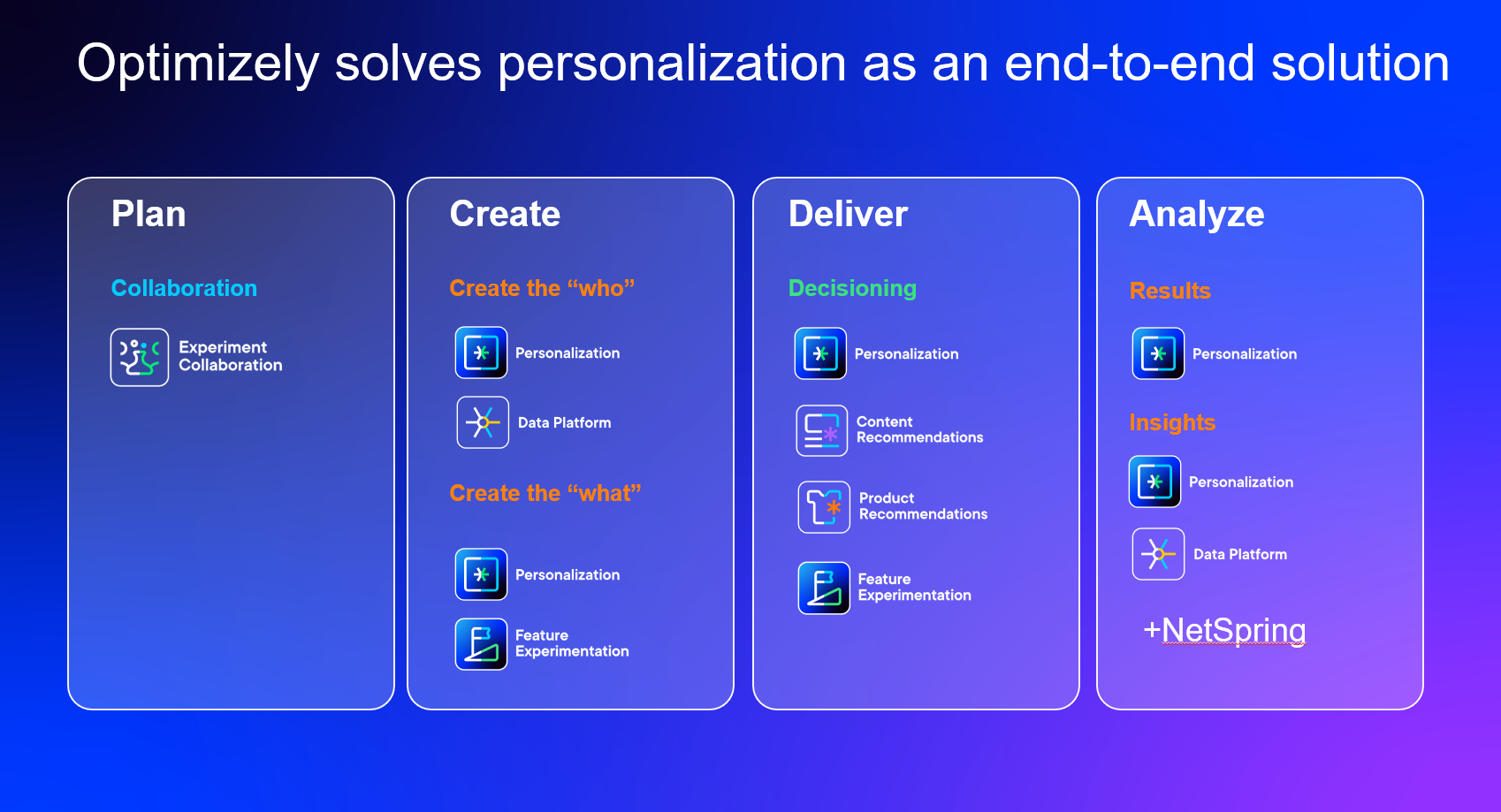
Personalization is the process of delivering a unique digital experience for each user by leveraging customer data and real-time behavior analysis. It's about creating experiences that feel uniquely tailored to individuals—like when Netflix suggests a show you'll love, Amazon recommends products you didn't know you needed, or Spotify crafts a playlist that just gets you.
Unlike customization, where users actively modify their experience (like designing custom sneakers), personalization is proactive: businesses predict and adapt to user needs without requiring direct input. Think of it as a digital concierge that anticipates your next move.
But personalization isn't just about algorithms and recommendations; it's a philosophy that reshapes how brands connect with people, how products adapt to user needs, and how technology evolves to mirror human individuality. When done effectively, personalization creates meaningful connections between businesses and customers by delivering the right content to the right person at the right time.
Some examples of personalization include:
- Product recommendations: Customers are shown relevant products on an ecommerce site based on similar customer behavior and purchase history
- Content recommendations: Websites surface related and relevant content to users on websites and mobile apps based on content they’ve interacted with.
- Omnichannel consistency: Successful personalization will yield symmetric experiences and messaging across all devices, social media channels, and any other touchpoints.
- Personalized marketing: Brands will use data that has either been collected or analyzed in real time to create a dynamic experience unique to the individual user. Instead of targeting an activity to a broad demographic, it is instead tailored to what is known about each specific individual user. Immediate surfacing of relevant content to web/app visitors increases user engagement, leading to less drop-off.
Overall, it lifts all performance metrics through higher conversions, clicks, and lower drop-offs.
Why is personalization important?
Today's consumers expect brands to know them.
In fact, over 75% of consumers are more likely to consider buying products from brands that deliver a personalized experience. In that same survey, respondents noted that not only do they expect a personalized experience, but they also become frustrated when they don't get one.
Here are more reasons why personalization matters:
1. Customers expect it
Today, personalization is the norm, not an exception. Consider your individual needs as a consumer. When you log into Amazon, you probably expect to see relevant product recommendations based on what you already purchased or what people similar to you purchased. When you log into Netflix, you see a list of recommended movies and TV shows. When you open your email, you see pitches tailored to your specific needs.
These are all personalized experiences that make your shopping or viewing that much easier. According to a RedPoint Global survey, 63% of consumers say that personalization is the standard of service today.
If you don't offer a personalized experience, customers will shift their loyalty to a competitor that does. Improved understanding of the customer leads to proper segmentation, yielding better personalization and subsequently higher customer satisfaction.
2. It provides a better customer experience
Personalization immerses the customers in an experience and makes them feel more comfortable with what is being offered. Surfacing the right content to customers results in improved customer satisfaction. That drives customer engagement, conversions and sales, and long-term customer loyalty.
Customers don’t want an experience that feels generic. They want retailers and ecommerce websites to provide them with an experience tailored to their personal needs. They want to feel as if they have your sole attention, not as if they’re just part of a mass mailing or visiting some website designed from a standard template. The more special you can make your customers feel, the more likely they’ll buy from you today and in the future.
3. Your competitors offer it
If you want customers to purchase what you offer, you must offer a customer journey that surpasses what they get elsewhere. An Accenture survey found that almost half (48%) of all consumers have abandoned a company's website and made a purchase elsewhere because they had a poor experience on the site.
4. It’s good for business
Personalization leads to better business outcomes, from customer retention to improved conversion rates. Focusing on the customers’ needs and experiences is smart marketing and will put you ahead of competitors offering a more generic experience.
Looking at lessons learned from 127,000 experiments, personalization generates a 41% higher impact compared to general experiences. According to Gartner Research, organizations using personalized messaging see 16% more impact on commercial outcomes.
The reality is that customers are more likely to purchase from companies that they know and trust. You can establish that relationship by leveraging what you know about your customers and using that to provide uniquely personalized experiences.
For example, right now, marketing campaigns are focused on email marketing and building email lists where readers feel part of the community. This way, they’re likely to buy from someone’s personalized emails whose content they regularly read in their email.
Every digital experience should focus on taking a visitor to the buying moment.
What are the different types of personalization?
Website personalization
Website personalization is the process of creating customized experiences for visitors to a website. Rather than providing a single, broad experience, website personalization allows companies to present visitors with unique experiences tailored to their needs and desires.
It involves tailoring various elements of a website, such as content, images, recommendations, and user interface, to align with the characteristics and behaviors of individual users. This approach aims to enhance user engagement, increase conversion rates, and foster deeper customer loyalty by making the website feel more relevant and personalized to each visitor.
Some of the key aspects of website personalization include:
- Data Collection: Personalization relies on collecting and analyzing user data, including browsing history, geolocation, demographics, and past purchases.
- Customization: It involves adapting website elements like headlines, product recommendations, and calls to action to match individual user profiles.
- Dynamic Content: Websites can dynamically change content in real-time based on user behavior, using technologies like AI and machine learning.
- Benefits: Personalization leads to increased sales, improved user experience, and higher customer retention rates.
App personalization
App personalization is the process of building a mobile app to meet the needs of specific audiences. Similar to other forms of personalization, app personalization aims to present user experiences that are customized to their specific needs rather than a broad, one-size-fits-all experience for all users.
It involves using customer data such as demographics, location, interests, and behavioral patterns to create a customized experience for each user, rather than providing a generic, one-size-fits-all approach.
Some key aspects of app personalization include:
- Customized content: Delivering relevant information, recommendations, and offers based on user preferences and history.
- Adaptive interfaces: Modifying the app's layout and navigation to suit individual user habits.
- Targeted messaging: Sending personalized push notifications and in-app communications.
- Dynamic features: Adjusting app functionality based on user behavior and needs.
Hyper personalization
Hyper personalization is an advanced marketing strategy that uses artificial intelligence (AI), machine learning (ML), and real-time data to create highly tailored experiences for individual customers. It goes beyond traditional personalization by treating customers as unique individuals with distinct preferences, rather than relying on broad customer segments.
Some key aspects of hyper personalization include:
- Data utilization: It leverages a wide range of data sources, including customer behavior, preferences, demographics, and contextual information like location and device usage.
- AI and ML implementation: Advanced algorithms analyze vast datasets to predict customer preferences and deliver personalized content dynamically.
- Real-time adaptation: Hyper-personalization systems can quickly adjust to changes in customer behavior, providing up-to-date and relevant experiences.
- Omnichannel approach: Personalized experiences are delivered across multiple touchpoints, including websites, mobile apps, emails, and ads.
- Granular customization: It aims to create a "segment-of-one" approach, tailoring content, product recommendations, and messaging to each individual customer.
Rule-based personalization
Rule-based personalization works by customizing user experiences with predefined rules to display specific content or features based on user demographics, actions, and behaviors.
You can almost think of this type of personalization as a flow chart, relying on “if/then” logic (For example, if a user performs action x, show them content y). Each of the touch points that are defined by predetermined rules is like the atoms mentioned above. These atoms might include the user's location, their age, or other affinities. Once these data points or atoms are plotted, the sequencing that occurs thereafter is what forms the molecules.
Some examples of rule-based personalization are:
- Dynamic content: Websites adapt to user actions to surface relevant messaging and content. This could take the form of content recommendations or adapting customized messaging to returning users.
- Dynamic alerts: Popups and banners show up on user behaviors with tailored messaging. A classic example of a dynamic alert is when a user goes to close a browser window and a pop-up shows up, encouraging the user to stay on the site.
- Dynamic layout: Pages are restructured to surface relevant content based on behaviors taken by the user during navigation. Google does this with SERPs if you are searching from a logged-in account.
AI personalization
Modern personalization relies heavily on AI to process massive datasets in real time. Machine learning models analyze millions of interactions to predict what a user wants next. Streaming services like Netflix use collaborative filtering—comparing your habits to similar users—to suggest content.
Here's how you can incorporate AI into your personalization program by taking the right steps:
- Start slow. Start small: Gradually introduce tailored content based on your customers' actions to avoid overwhelming them with too much at once.
- Test everything: Continuously test AI-enhanced personalization strategies and collect feedback, then make adjustments based on how your customers respond.
- Add a human touch: While the recommendations may be algorithmically generated, ensuring that there's a human factor in interactions can make the experience more personal.
Key benefits of personalization
- Improved customer engagement & satisfaction: When you visit an ecommerce site and see "Recommended for You" products, that's personalization in action. The site analyzes your browsing history, past purchases, and even mouse movements to curate items you're likely to buy. Similarly, personalized email campaigns boost engagement by making interactions feel one-on-one.
- Increased conversion rates & revenue: Immediate surfacing of relevant content increases user engagement, leading to less drop-off. Overall, it lifts all performance metrics through higher conversions, clicks, and lower drop-offs.
- Enhanced brand loyalty: When a brand demonstrates it understands a customer's needs (e.g., suggesting a replacement for a frequently purchased item), it builds loyalty. This shift isn't just about convenience; it's about trust.
- Better data insights: Personalization provides valuable insights into customer behavior and preferences, helping businesses make more informed decisions about product development, marketing strategies, and customer experience improvements. Modern personalization analytics go beyond surface-level engagement metrics to measure real business impact on customer lifetime value, retention rates, and revenue per user.
- Competitive advantage: Organizations that effectively implement personalization strategies gain a significant advantage over competitors who provide generic experiences, as customers increasingly expect tailored interactions across their entire customer journey.
Personalization best practices
1. Start with clear objectives
Every digital experience should focus on taking a visitor to the buying moment. Define what you want to achieve with personalization before implementing any strategies.
2. Collect and leverage relevant data
- Product recommendations: Show relevant products based on customer behavior and purchase history
- Content recommendations: Surface-related content based on user interactions
- Omnichannel consistency: Deliver symmetric experiences across all devices and touchpoints
- Personalized marketing: Use real-time data to create dynamic experiences unique to each user
3. Test and iterate
Personalization caters to what is known about each specific individual user. Continuous A/B testing and experimentation are crucial for optimizing strategies and understanding what drives meaningful results.
4. Respect user privacy
Although 78% of consumers cite they are likely to engage with a personalized offer tailored to their interests, 77% of consumers also cited that data privacy policies are important to maintaining brand loyalty.
5. Balance automation with human oversight
While AI and machine learning can automate much of the personalization process, human oversight ensures experiences remain relevant and appropriate for your brand and customers.
Building your personalization strategy
Personalization is a strategy for offering highly individual experiences based on each consumer’s known characteristics. It involves analyzing consumer behavior and then using this information to design made-to-order experiences that more fully engage the customer.
There are four essential pillars of building your personalization strategy: